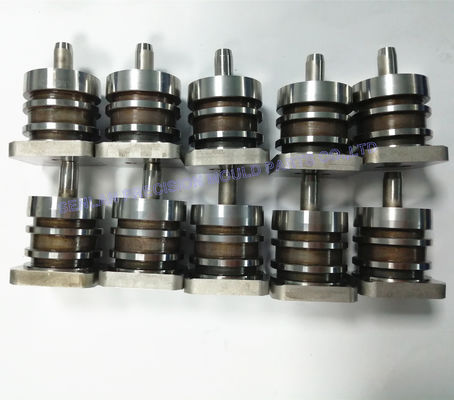
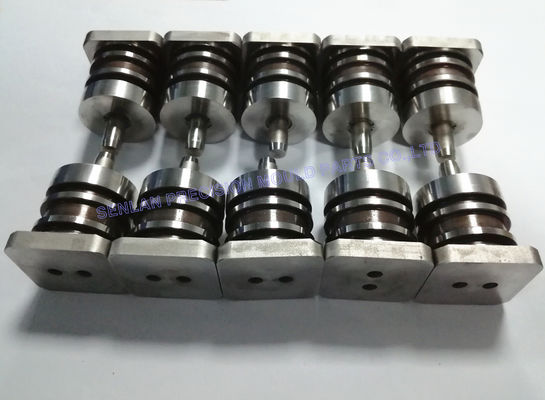
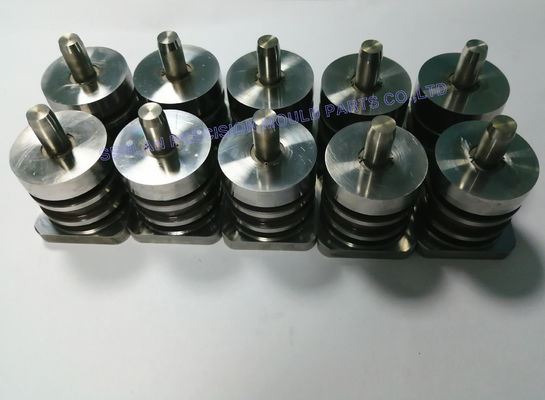
1.2343 Material Precision Mould Parts / EDM Machining Plastic Mold Parts
EDM (Electrical Discharge Machining) operates on the principle of material removal through high-temperature sparks generated between the electrode and workpiece. This process is particularly suitable for machining high-hardness conductive materials, with CNC EDM machines representing the most advanced form of this technology.
EDM machining is primarily used for creating complex shapes and delicate workpieces including punches, dies, embossing dies, fixing plates, unloading plates, forming knives, stencils, metal electrodes, micro-holes, narrow slits, and arbitrary curves. The technology offers significant advantages including minimal machining allowance, high precision, short production cycles, and low manufacturing costs, making it widely adopted in industrial applications.
Product Specifications
| Material |
1.2343 |
| Hardness |
48-52 HRC or material dependent |
| Heat Treatment |
Available |
| Service |
Made-to-order |
| Surface Treatment |
TiCN, TiN, Aitain, Ticrn, nitriding, Black oxygened, Black coating, etc. |
| Closest Tolerance |
±0.01mm |
| Polishness |
Ra0.6 |
| Axiality |
0.005mm |
| Verticality |
0.005mm |
Key Features
1. EDM Processing Speed and Surface Quality
EDM mold processing typically employs coarse, medium, and fine grading. Roughing achieves high power with minimal loss, while medium and precision machining may involve slightly higher electrode loss. However, given the small machining allowances in these stages, electrode loss remains negligible and can be compensated through size control without affecting precision requirements.
2. EDM Carbon Residue and Slagging
Successful EDM processing depends on effective carbon residue generation and removal. Processing speed may be sacrificed to manage carbon residue through techniques like high voltage and large pause pulse waves during medium and finishing stages. Complex surface geometries may require additional measures to ensure proper chip removal and processing conditions.
3. EDM Workpiece and Electrode Loss
Longer discharge pulse durations help minimize electrode loss. Roughing typically uses long pulse waves with high current, resulting in minimal electrode loss. In contrast, finishing requires smaller currents and shorter pulse times, which increases electrode loss and reduces processing speed.
Delivery, Payment & Service
| Delivery |
- Express by air (UPS, DHL, FedEx, TNT, EMS, etc.)
- Ship by sea
- Customer requirements welcome
|
| Payment |
- T/T payment, L/C, D/A, D/P
- PayPal, Escrow
- Western Union,
|
| After-sale Service |
Comprehensive after-sale service provided as part of our factory tradition |
Manufacturing Advantages
Competitive Pricing
As a direct manufacturer seeking long-term partnerships, we offer highly competitive market pricing.
Material Quality
We maintain stable raw material supplies and stock various qualified materials including SKD-11, SKH-51, Tungsten carbide, ASP-23, ASP-60, and others.
Dimensional Precision
Our manufacturing capabilities meet MISUMI standards for precision sizing.
Fast Delivery
Through well-organized management, we typically deliver finished goods within 15 days.
Frequently Asked Questions
Q: Are you a factory or trading company?
A: We are a factory with over 10 years of experience in hardware production.
Q: How does your factory handle quality control?
A: Quality is fundamental to our operations. We implement material inspection, process inspection, and full inspection before shipment to ensure excellent quality standards.



 Your message must be between 20-3,000 characters!
 English