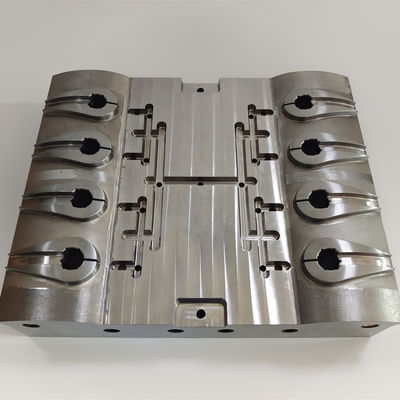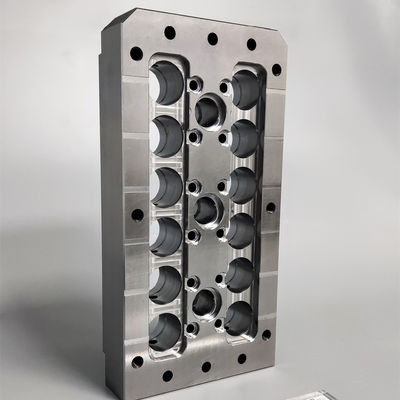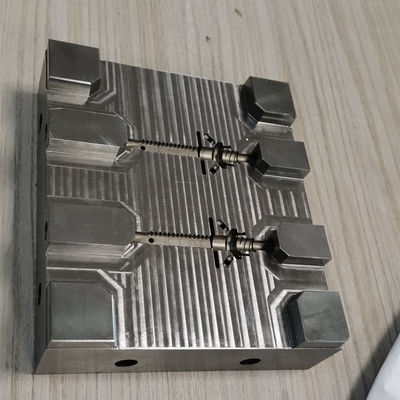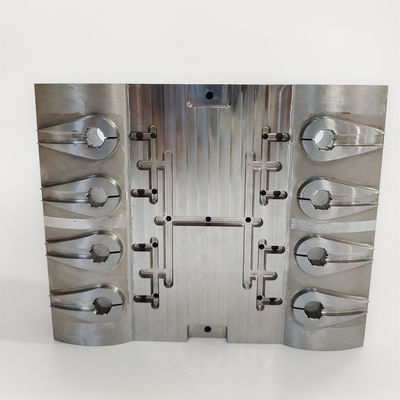
|
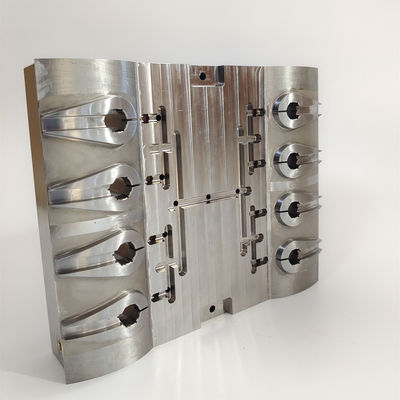
Product Details:
|
| Hardness: | HRC56 | Accuracy: | +/-0.005mm |
|---|---|---|---|
| Surface Treatment: | Polished, Tin, Ticn, Crn, Dlc | Product Name: | Mold Core |
| Quality: | High Quality | Shaping Mode: | Plastic Injection Mould |
| Product Material: | HSS | Product: | Medical Plastic Mold |
| Standard: | JIS, DIN, En, ASTM, AISI | Design Software: | Autocad, Autocad/Ug/Solidworks, CAD |
| Size: | Customize | Color: | Black |
| Feature: | Durable | Usage: | Plastic Parts |
| Delivery Time: | 5-20 Days | ||
| Highlight: | HSS Syringe Mold Core,Pipette Tip Injection Molding Components,Tin Coated Syringe Mold Core |
||
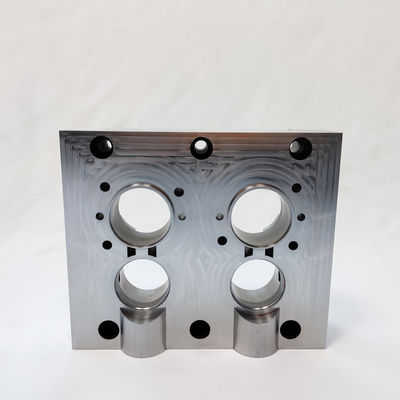
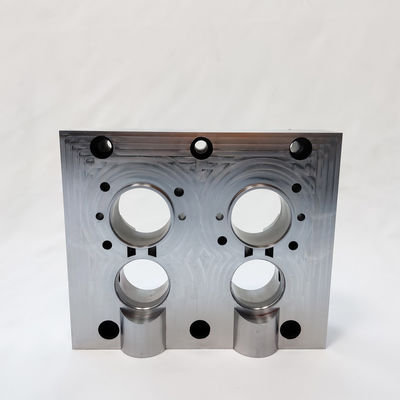
Our High Precision HSS Syringe Mold Core with TiN coating is specifically engineered for laboratory pipette tip and medical injection molding applications.
These mold cores are designed for:
Thin-wall pipette tip molds
Multi-cavity syringe molds
High-speed medical plastic production
Precision laboratory consumables
Manufactured from high-speed steel (HSS) and finished with controlled TiN coating, the core pins provide dimensional stability, wear resistance, and consistent demolding performance in high-cycle environments.
All components are produced strictly according to customer drawings.
This mold core solution is widely used in:
Laboratory pipette tip molds
Disposable syringe molds
Medical consumables injection molds
Diagnostic plastic components
Cleanroom production tooling
These applications require micron-level precision and repeatable multi-cavity performance.
HSS provides:
High hardness after heat treatment
Good resistance to edge wear
Dimensional stability in small-diameter cores
Reduced deformation risk during long production runs
Typical hardness range:
60–62 HRC (adjustable depending on project requirements)
TiN coating enhances:
Surface hardness
Wear resistance
Reduced friction during ejection
Improved resistance to resin adhesion
In pipette tip molds, TiN helps maintain consistent surface quality and reduces maintenance frequency.
Pipette tip cores are long, slender, and highly precise.
Performance depends on:
Concentricity
Taper accuracy
Surface finish
Thermal stability
Diameter tolerance: ±0.01 mm (tighter tolerance available upon request)
Axiality: ≤ 0.005 mm
Verticality: ≤ 0.005 mm
Surface finish: Ra 0.6 or finer
Accurate geometry ensures proper tip wall thickness and uniform flow during injection.
Core surface polishing supports:
Smooth demolding
Stable resin flow
Reduced surface defects
Mirror or fine polishing can be applied based on project requirements.
In high-cavity medical molds:
Cores must maintain identical dimensions
Alignment between cavity and core must be precise
Taper and length consistency are critical
Simultaneous machining and controlled grinding processes ensure uniformity across cavities.
Processing includes:
High-speed CNC machining
Precision cylindrical grinding
Wire EDM for detailed features
Surface grinding and polishing
TiN PVD coating application
CMM dimensional inspection
Critical features are ground after heat treatment to ensure dimensional stability.
Common materials for syringe and pipette tips include:
PP
PE
PC
Medical-grade thermoplastics
Mold core design is optimized based on resin shrinkage and flow characteristics.
Each mold core undergoes:
Material verification
Hardness testing
Dimensional inspection
Surface roughness measurement
Coating adhesion verification
Inspection reports are available upon request.
We support:
Manufacturing based on 2D / 3D files (STEP, IGS, X_T, etc.)
Custom taper and length designs
High-cavity mold production
Replacement cores for existing medical molds
Technical communication is maintained to ensure full specification alignment.
Q1: Why use HSS instead of stainless steel?
HSS provides higher hardness and better wear resistance for high-cycle molds.
Q2: Does TiN coating affect dimensional tolerance?
Coating thickness is controlled, and dimensions are adjusted before coating to maintain final accuracy.
Q3: Are long slender cores supported?
Yes. Precision grinding ensures straightness and concentricity for long micro-diameter cores.
Q4: Can these cores be used in 64+ cavity molds?
Yes. Multi-cavity uniformity is maintained through controlled batch machining.
Q5: Are medical-grade requirements supported?
Yes. Components can be produced for medical and laboratory mold applications.
Please provide:
2D / 3D drawings
Plastic material type
Required cavity count
Tolerance specification
Surface finish requirement
Quantity and delivery timeline
Our engineering team will review your specifications and provide a technical proposal.
Contact Person: Miss. Merry
Tel: +8618666474704
Fax: 86-769-81153616